Back to school organization with multiple kids is a reset, not a shopping trip: one full day, two weeks before the first day, in which every system the school year depends on gets emptied, relabeled and restocked, for about $60 in bins and labels. We have five kids, ages 4 through 14, at three schools, and I did this reset for eight years in a classroom before I did it in a house, and it's the same job with a smaller budget. Since the reset became a fixed day on the calendar, we have missed zero school activities. Zero, in four years, across five kids, which I say not to boast but because before the reset it was about six a year. This post is the seven stations we reset and in what order, the homework station supply list per age, the mudroom zones, the schedule board and where it hangs, the paper flow for forms, the clothes and lunch systems, the morning routine that starts the week before school, and the parts of the reset that failed.
The day, in order
A Saturday, kids at the pool with Matt until 2. Morning: the homework station, the mudroom, the drop zone. Afternoon, with the older three back: the closets, the lunch station, the schedule board, the calendar. Evening: labels and the supply run for anything that turned up missing. I do it in that order because the stations that need only me come first and the ones that need the kids' input (which uniform still fits, which pencil case they'll actually carry) come when they're home. It's the same order I set up a classroom: furniture and systems before the students arrive, personal things with them.
Station 1: the homework station reset
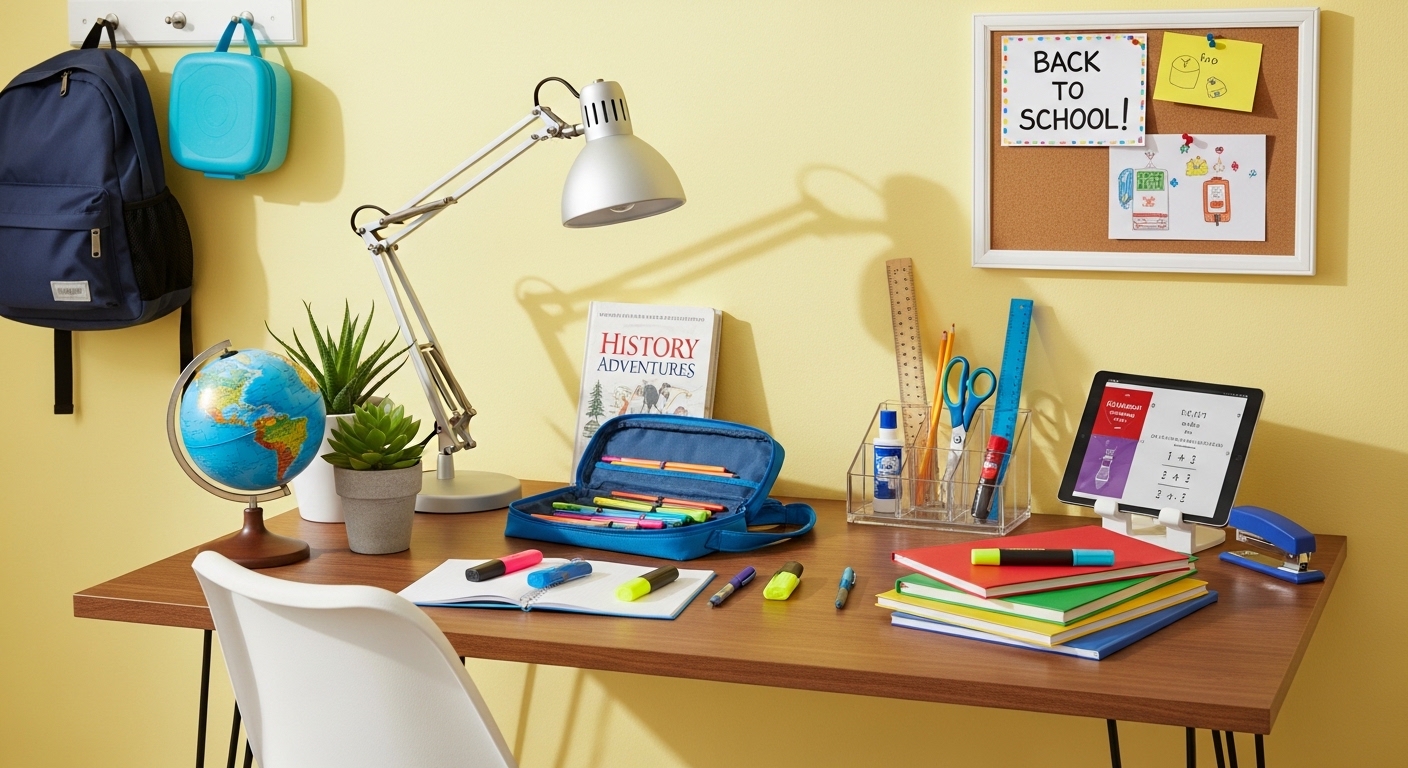
Each child's zone at the homework station is emptied, wiped and restocked. Fresh pencils (a dozen per kid, sharpened), two erasers, a glue stick, scissors matched to the age, a ruler, a highlighter for the 12- and 14-year-olds, and one folder per subject for the middle schoolers. Charging cables for the school tablets confirmed working and labeled with tape in the kid's color. Grade-level materials updated: a multiplication chart for the 9-year-old, a laminated schedule for the 14-year-old, a letter strip for the 4-year-old's corner even though she only draws. Anything that accumulated over summer, a year's worth of dried markers and half a science project, gets sorted, and the stapler that walks off gets tied to the station with a length of cord, which is the classroom trick that has held for two years. Forty-five minutes, and it pays every weekday for nine months.
Station 2: the mudroom reset
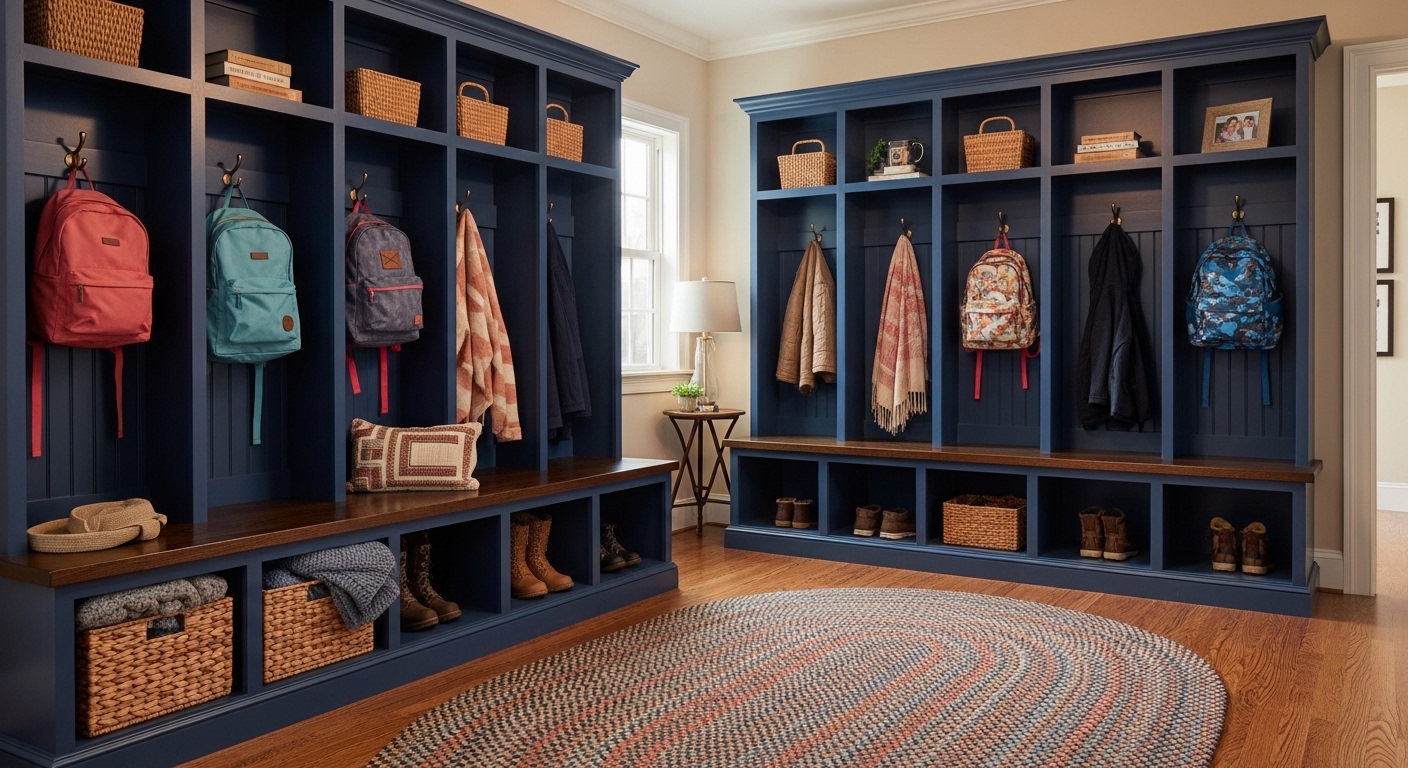
Each kid's zone on the mudroom bench gets a fresh name label, because names don't change but heights do and the 7-year-old's hook goes up 2 inches a year. New hooks if a kid has outgrown the height. The under-bench bin for each child gets sorted for fall: sneakers, a light jacket, the water bottle, and nothing from summer. The light above the cubbies gets a fresh 2700K bulb, because a mudroom at 7 am in November is dark and the bulb is the difference between a found shoe and a lost one. The shoe rack gets one pair of school shoes per kid on it and the rest go to the closets. Twenty minutes.
Station 3: the drop zone reset
The drop zone baskets get emptied, the "needs action" basket is swapped for a bigger one for the two weeks of forms, the hooks get their tags checked, the library basket gets the summer books returned, and the sconce gets its bulb. The rule that starts this week: backpacks on hooks every night, from the first day, not the first week, because the first week is when the habit is set or isn't. Ten minutes.
Station 4: closets and the clothes system
Each kid tries on the school clothes, which takes an hour for five and is the part of the day that involves the most negotiation. Outgrown things go to the hand-me-down bin for the next kid down; that's the one benefit of five kids that the older ones resent. Each closet gets five outfits hung on the left, one per school day, for the two younger kids, which is the trick that made mornings possible: the 7-year-old dresses from the left hook and the 4-year-old from the one after it, and nobody chooses anything at 6:50 am. The 9-year-old picks his own the night before; the 12- and 14-year-olds are on their own and have been since 10, per the chores chart. Uniform pieces are counted (five shirts, three bottoms) and the missing ones go on the supply list.
Station 5: the lunch station
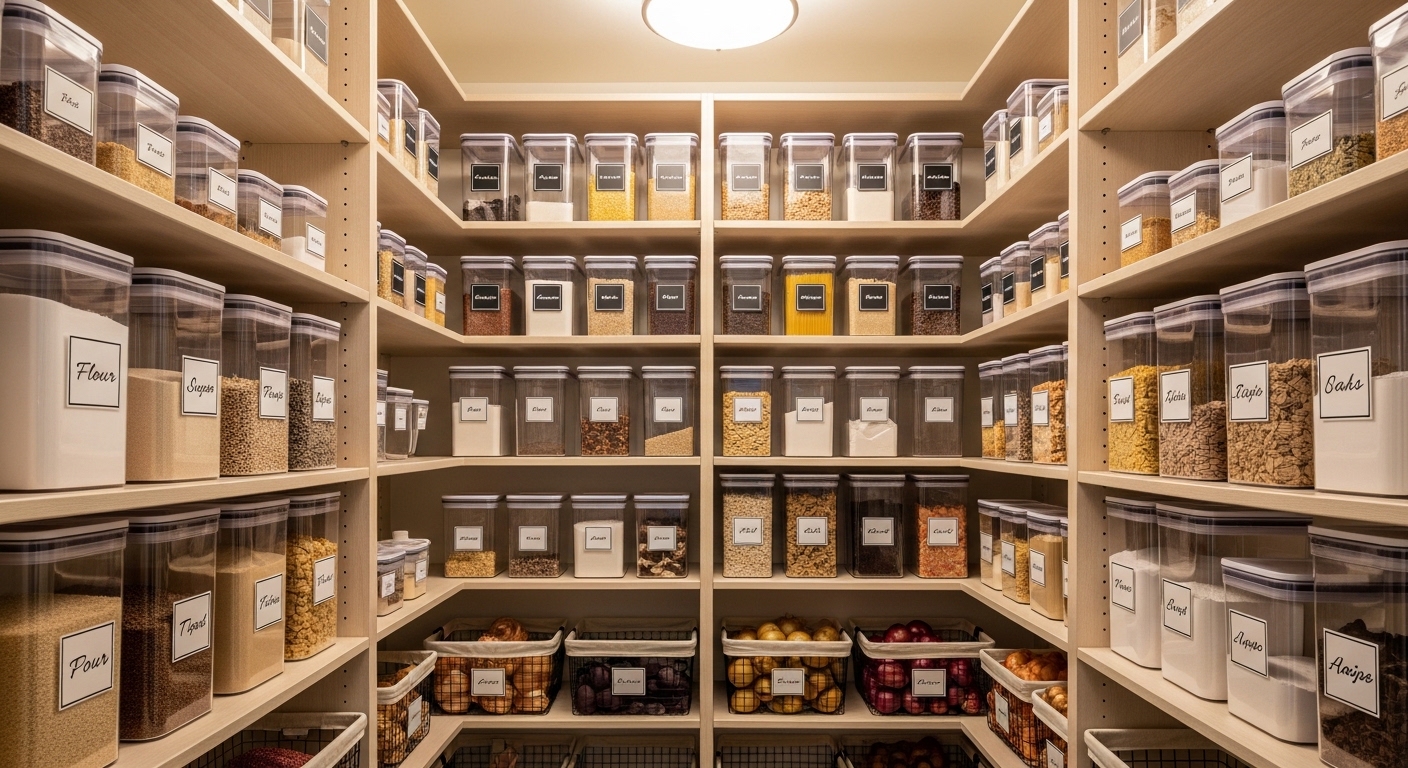
A shelf in the pantry and a drawer in the fridge, restocked and labeled "lunch," from the pantry system. Five lunch boxes, washed, lids checked, ice packs in the freezer door in a labeled bin. Anyone 9 and up packs their own from the lunch shelf the night before, which is a chore; I pack the 7-year-old's and the 4-year-old's on Sunday for the week from the meal prep containers. Lunch account balances checked online and topped up for the semester so nobody is short on day one, which happened once and which the 12-year-old still mentions.
Station 6: the schedule board
A large weekly whiteboard goes up on the command center wall in the kitchen with every child's schedule for the week, color-coded by kid: school hours, practices, lessons, pickups, and who's driving. Permission slips, appointments and activity schedules all in one place. It lives under the kitchen light so it's always in a lit, visible spot, which sounds like a small thing and isn't; the board in our previous house lived in a dark hallway and nobody looked at it. Each kid's laminated weekly card gets reprinted with the new year's schedule and hung on their hook below the board. Since this went up, zero missed activities. The board is the one part of the reset I'd do if I could only do one.
Station 7: the calendar and the forms
Every date the schools have published goes on the month calendar that evening: first day, early dismissals, picture day, the fall break, conferences, the 14-year-old's tryouts. Three schools means three calendars to reconcile, and this is the hour that makes September calm. Forms get a folder per school at the drop zone for two weeks, then the folders go away. Emergency contacts, pickup lists and medical forms get filled out once at the kitchen table with a copy in the command center's "household" pocket, so the next year's are copied rather than reconstructed from memory. The 4-year-old's preschool forms are the most numerous and the least likely to be read by anyone, and I fill them out anyway.
The week before: practicing the morning
School bedtimes start the Monday before school does, moved back fifteen minutes a night from summer hours. Wake-ups too. On Thursday and Friday of that week we run the whole morning as if it were a school day: dressed from the left hook, breakfast from the meal prep oatmeal, backpack from the drop zone, out the door by 7:15 to the driveway and back. It feels ridiculous and it works, and the kids know it's a drill and treat it like a fire drill, which is to say seriously and with complaints, and the 4-year-old wears her backpack to the driveway both days as if it were a parade. The first real morning of the year, this September, we were in the car at 7:12.
The homework station supply list, by age
Age 4 (preschool corner): fat crayons, a glue stick, safety scissors, a pad of blank paper, a letter strip, and a small basket for the artwork that comes home daily. Age 7: pencils, a pencil grip, an eraser, kid scissors, glue, a small whiteboard for spelling practice, and a folder for the reading log. Age 9: a dozen pencils, two erasers, a ruler, a multiplication chart, a folder per subject (three), index cards, and a timer, because a 9-year-old's homework is a 20-minute job that takes an hour without one. Age 12: the above plus highlighters, a planner, a charging cable for the school tablet, and a folder for each of six subjects. Age 14: whatever she says she needs, which she buys from the supply money with the receipt taped to the station, plus the cable and a lamp she chose. Each kid's supplies live in a labeled caddy in their zone, and the shared things (stapler on its cord, tape, hole punch, the printer) live in the middle. The lighting over the station, a sconce per zone at 3000K, is in the station post, and it's the reason the older kids do homework there rather than in bed.
The morning routine, as it runs after the reset
6:40, the older three up on their own alarms; 6:50, the little two up with me. Dressed from the left hook. Breakfast from the oatmeal pan, at the banquette, seven minutes. Teeth. Backpacks from the drop zone hooks, lunches from the fridge drawer, shoes from the rack. The schedule board checked by whoever's driving, which is usually me, with the week's card. 7:15 in the car. It runs because every object has a place that was set in August and because nobody decides anything at 6:50 am, which is the principle behind the whole reset: decisions in August, execution in September. The mornings that go wrong are the ones where a system got skipped, a backpack left in a bedroom, a form not signed the night before, and I can usually trace it to a station I rushed on reset day.
Back to school with one kid, or with a kindergartner
The reset scales down without losing its shape. One kid: the same seven stations in a morning, with a single hook, a single caddy, a single card, and the schedule board replaced by a small monthly calendar on the fridge side. A first kindergartner, which we've done five times: the mudroom hook at 30 inches and the outfit hooks are the two things that matter most, because the first month of kindergarten is about getting out the door with the right things, and a 5-year-old can do it alone if the things are at her height and in order. The lunch station for one is a single labeled shelf. The reset for a first-timer is also the year to start the "backpack on the hook every night" rule, because it's a habit that's easy at 5 and a fight at 12, and the 12-year-old is my evidence.
What failed
Buying supplies before the reset, which meant buying things we had. A single "school bin" per kid, which held everything and therefore nothing. Labeling with a label maker, which produced labels nobody could read from across the mudroom; a marker on tape in the kid's color reads from the door. A shared family calendar app for the kids, which the 14-year-old used and the rest ignored; the wall is the version everyone can read. Doing the reset the weekend before school, which left no time for the missing shoes to be bought. Two weeks before is the number, and it's the number because the shoes take a week to arrive.
What it costs, and what it saves
Bins and labels, about $60 a year; most of the bins are reused and the $60 is the new ones plus tape and markers. Supplies from the school lists, about $180 for five kids, bought after the reset rather than before, which is about $70 less than the year I bought first. Two 2700K bulbs, $8. The lunch shelf restock, part of the normal grocery week. Against that: no missed activities in four years, no forgotten forms, and a September that feels organized instead of like we're always catching up, which was the feeling I was trying to buy. One day, $70 in bins and bulbs, and the same list every August, taped inside the pantry door with the meal prep list, where I'll find it next year.
Shop this post: wall sconces for the homework station and hallway, and pendant lights for the kitchen schedule wall