Healthy meal prep ideas for the week, for a family of seven, come down to a Sunday system rather than a list of recipes: three proteins, two grains, a sheet pan of roasted vegetables, a tray of raw ones, two sauces, and a breakfast, all cooked in three to four hours and stored in labeled containers by day. That's what feeds our five kids, ages 4 through 14, my husband Matt and me from Monday to Friday without takeout, and it's the most important thing I do all week. If Sunday prep doesn't happen, the week is chaotic dinners and $60 of pizza by Wednesday. This post is the actual plan, the eight things I prep every week and what they turn into, the kitchen setup that makes three hours possible, the containers, the shopping list, the lighting (which sounds unrelated and isn't), and the mistakes from the first year of doing this that I'd like to save you.
The Sunday plan in one paragraph
From 1 pm to about 4:30, in this order: oven on, two sheet pans of vegetables in; big pot of rice or quinoa and a pot of pasta going; chicken thighs in the oven on the third rack, ground beef browning on the stove; while those cook, wash and cut the raw vegetables and fruit for the week; two sauces in jars; hard-boil a dozen eggs and make a pan of baked oatmeal for breakfasts. Everything cools on the island, gets portioned into containers, labeled with the day, and stacked in the fridge in a specific order. Matt does the dishes as I go, which is the one part of the system I won't pretend I do alone.
The eight things I prep every week
Proteins: a tray of roasted chicken thighs (about 4 pounds), 2 pounds of ground beef or turkey browned with onion, and either a pot of black beans or a dozen hard-boiled eggs. Grains: a big pot of rice and a pot of short pasta, cooled and portioned. Vegetables: two sheet pans roasted (whatever's cheap: broccoli, carrots, sweet potato, peppers, zucchini) and a tray of raw ones cut for lunches and snacks (cucumber, carrot sticks, bell pepper, cherry tomatoes). Sauces: a jar of a yogurt-herb sauce and a jar of something with more flavor for the adults and the 14-year-old, usually a peanut or a chili-lime. Breakfast: a 9 by 13 of baked oatmeal or a batch of egg muffins. That's it, and it's the same eight categories every week; only the specifics change with what's on sale.
What those eight things turn into, Monday to Friday
Monday: chicken, rice and roasted vegetables, with the yogurt sauce for the little ones and the spicy one for the rest, the most-liked dinner in the house and the least work. Tuesday: taco bowls with the ground beef, rice, beans, raw peppers and tomatoes, and shredded cheese, which the kids assemble themselves and which counts as a chore on the chores chart. Wednesday: pasta with the ground beef stirred into a jar of good sauce and the roasted vegetables on the side, on the table in twelve minutes after soccer. Thursday: chicken and vegetable fried rice using whatever rice and roasted vegetables are left, with the eggs scrambled in. Friday: "bowls," which is the fridge cleared out into the seven bowls with a choice of sauce, and which the kids like more than any planned dinner. Lunches are the raw vegetables, a protein, a grain and fruit in five containers the night before. Breakfast is the baked oatmeal, reheated, all week.
Portions for seven, so you buy enough
The number that took me a year to learn: a family of seven with three kids over nine eats about what four adults eat, and that number goes up every birthday. Per week I buy 4 pounds of chicken thighs, 2 pounds of ground meat, 3 cups of dry rice, 1.5 pounds of dry pasta, about 6 pounds of vegetables for roasting and 4 for raw, two dozen eggs (a dozen to boil, a dozen for the muffins or the fried rice), and 12 to 15 pieces of fruit. That's around $95 to $110 at our Nashville grocery store, which is less than half what the same week costs when nothing is prepped and dinner is decided at 5:40 pm. Round up on the protein. Nobody has ever complained about leftover chicken, and the 14-year-old has been known to eat it cold standing at the fridge at 10 pm.
The kitchen setup that makes three hours possible
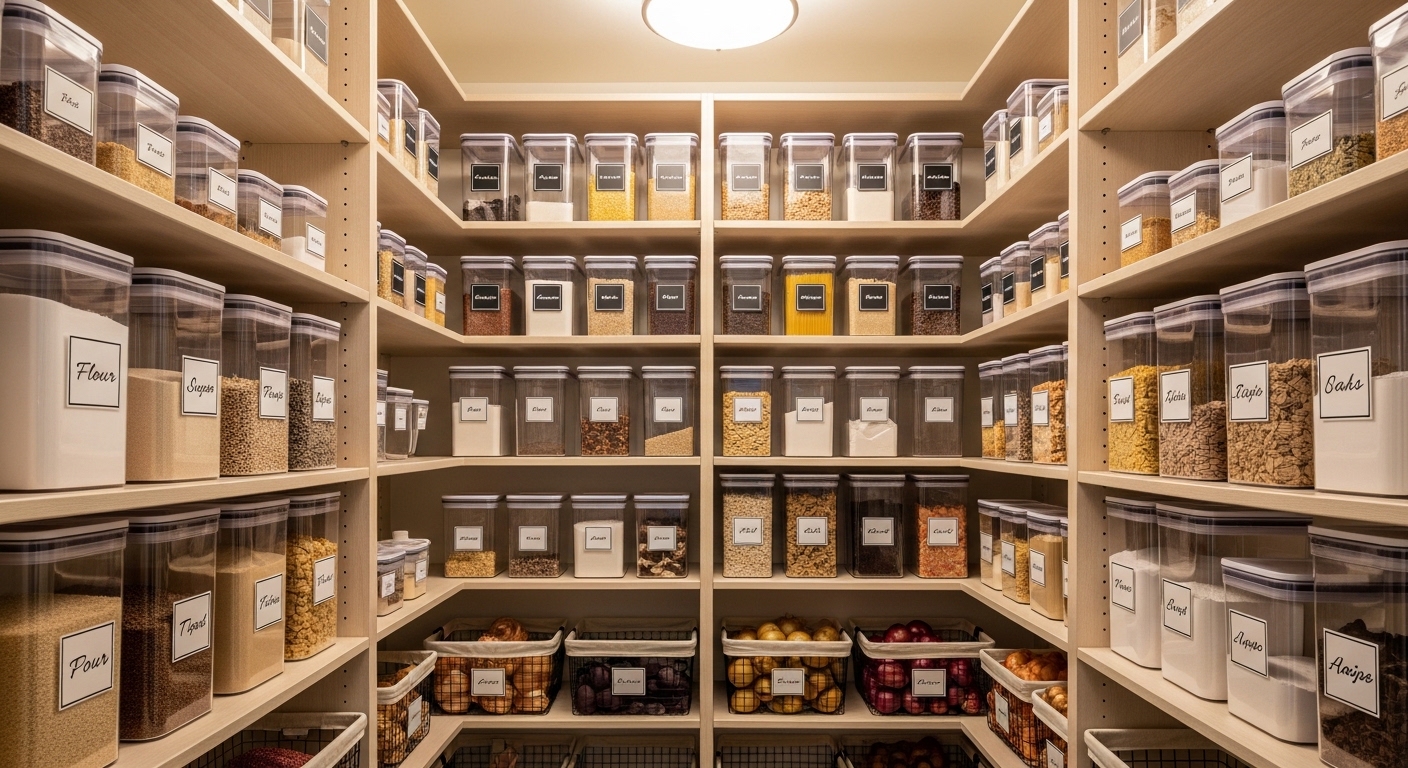
The island is cleared completely on Sunday morning; it's 7 feet long and every inch gets used. Cutting boards staged (three: one for raw meat, two for vegetables), knives out, the big bowls stacked, the sheet pans lined. The oven runs at 400°F for the whole session and things rotate through it. The stove has two pots and a skillet going at once, which is the limit of one person's attention. Containers are out on the counter by the fridge before anything cooks, because portioning at the end into containers you have to find in a cabinet is how the whole thing runs to 5:30. The pantry side of the system, where the grains and the "lunch shelf" live, is in my pantry post.
The container system
Glass, rectangular, three sizes, all the same brand so the lids interchange: twelve 4-cup for dinners and components, ten 2-cup for lunches, six 1-cup for sauces and snacks. A roll of masking tape and a marker on the fridge door for labels, because the label is the day, not the contents; "TUES" on a container means it comes out Tuesday whatever's in it. The fridge is loaded top to bottom by day, Monday on top, so the kids can find tonight's dinner without asking. It cost about $140 to buy the set four years ago and I've replaced two lids. The plastic ones I used before stained, warped and got lost in the school bags at a rate of about one a week.
The lighting setup, which sounds unrelated
Three pendants over the island plus LED strips under every cabinet. During Sunday prep the whole kitchen is lit to 100 percent: I need to see every hot pan, read every label, and catch the 4-year-old's hand heading for the knife block. The flush mount on the stove side handles the cooking zone so there are no shadows over the pots. This matters more than it sounds: our first year of prep was under a single dim ceiling fixture, I cut myself twice and roasted a tray of vegetables to charcoal because I couldn't see them in the oven. The lighting plan is in my island lighting post, and it's the one kitchen upgrade that made Sunday faster.
Healthy, without a lecture
The system is healthy because the vegetables are already cooked and cut, so they get eaten, and because the sauces are what make a plate of chicken and broccoli interesting five nights running. Every dinner is a protein, a grain or starch, a cooked vegetable and a raw one, and the kids build their own plates from those four things, which is the rule that ended most of the "I don't like it." Seasonings change weekly so the same chicken tastes different (lemon and oregano, then smoked paprika, then soy and ginger). Fruit is cut and at eye level in the fridge. Snacks are the raw vegetables and the egg muffins. It isn't a diet and I've never called it one; it's dinner at 5:45 with something green on it, five nights a week, for seven people, and it hasn't been takeout on a Wednesday in four years.
The shopping list, Saturday, in the order the store is laid out
Produce: 3 pounds of broccoli or a mix of what's cheap for roasting, 2 pounds of carrots, 2 sweet potatoes, 2 peppers, 1 cucumber, a pint of cherry tomatoes, 2 onions, garlic, a lemon, 12 to 15 pieces of fruit, a bunch of herbs. Meat: 4 pounds of boneless chicken thighs, 2 pounds of ground beef or turkey. Dairy: two dozen eggs, a large tub of plain yogurt, a block of cheddar. Dry: rice, short pasta, oats, a can or two of black beans, a jar of good tomato sauce. That list is taped inside the pantry door and I photograph it rather than rewrite it. I shop Saturday morning with the 9-year-old, who is in charge of produce and takes it seriously, and the whole trip is 40 minutes because the list doesn't change.
Storage, reheating and how long things keep
Cooked chicken and ground meat, four days in the fridge, so Thursday's fried rice is the last day for both and Friday's bowls use the beans and eggs. Cooked grains, five days. Roasted vegetables, five days, and they're better cold in a lunch than most people expect. Raw cut vegetables, five days in a container with a folded paper towel in the bottom. Hard-boiled eggs, a week in the shell. Baked oatmeal, five days, and it freezes. Reheat dinners in the oven at 350°F for 15 minutes on a sheet pan, not the microwave, if you have the 15 minutes; the microwave is fine for lunches. Anything that will be Thursday or later can go in the freezer on Sunday and come out Wednesday night, which is how I keep the chicken safe in July when the fridge is opened forty times a day.
Getting the kids to eat it
Eight years in a classroom taught me that kids eat what they had a hand in and refuse what appears in front of them, and the meal prep system uses that. The 9-year-old picks the vegetables at the store, so he'll eat the peppers he chose. Everyone builds their own plate from the four components, so the 4-year-old's plate is chicken, rice and three cherry tomatoes she arranged herself, and that's fine. The sauces are on the table, not on the food. Nothing gets a label like "healthy" or "good for you," which is the fastest way I know to make a child suspicious of broccoli. And Friday bowls, where the rule is that you can have anything in the fridge as long as there's something green in the bowl, is the meal the kids ask for. Five kids, four years, and the only thing that reliably goes uneaten is the zucchini, which I keep roasting out of stubbornness and hope.
Mistakes from the first year
Prepping full recipes instead of components, so Thursday's dinner was a thing nobody wanted by Thursday; components let the week flex. Prepping too little, then running out on Wednesday and defaulting to pizza anyway. Using the plastic containers. Starting at 3 pm and finishing at 7, which is dinnertime, on the one day I'd wanted a break. Trying to prep with five kids in the kitchen: now the 12- and 14-year-olds help for the first hour, the 9-year-old does the raw vegetables, and the two littlest are Matt's until 3. And skipping a week "because it was busy," which turned into three weeks and $200 of takeout. The system only works if it's the same every Sunday, which is the teacher in me talking, and she's right.
A shorter version if you have less time or fewer people
Ninety minutes, four people: one protein (the chicken), one grain, one sheet pan of vegetables, one raw tray, one sauce, the eggs. That's four dinners and the lunches. The container count halves. The order stays the same, oven first, then stove, then cutting while things cook, and the labels stay the day, not the food. If you have twenty minutes, roast the vegetables and boil the eggs, because those are the two things that make a weeknight dinner take ten minutes instead of forty, and they're the two things I'd never skip.
Shop this post: kitchen pendant lights and flush mount kitchen lights